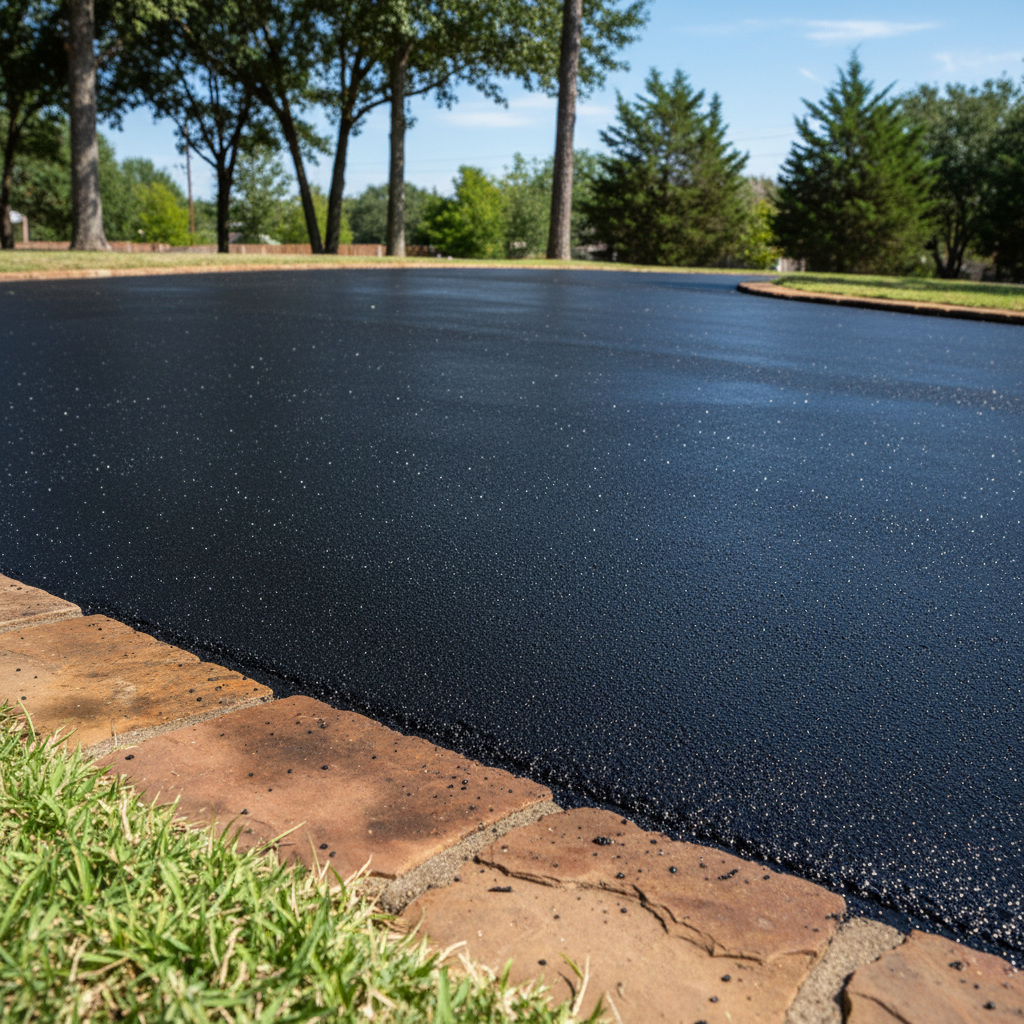
Alright, let's talk slurry coating. I get a lot of questions about this from folks all over Dallas, from Preston Hollow to Oak Cliff. It's one of those things that sounds a bit technical, but it's actually pretty straightforward once you understand what it's for. Think of it as a heavy-duty protective layer for your asphalt. It's not just a pretty face; it's about extending the life of your pavement. I’ve seen firsthand what the Texas sun and our crazy weather can do to a driveway, and sometimes, a good slurry coat is exactly what the doctor ordered. Here are the most common questions I hear, and I'll give you the honest answers.
What exactly is slurry coating, and how is it different from sealcoating?
This is probably the number one question I get. Look, both sealcoating and slurry coating protect your asphalt, but they're not the same thing. Think of sealcoating as a thin, protective paint job. It's great for newer driveways or ones in pretty good shape. It seals the surface, prevents oxidation, and gives it that nice black finish. It's mostly for preventative maintenance.
Slurry coating, on the other hand, is a much thicker, more substantial application. It's a mix of asphalt emulsion, fine aggregates (like sand), water, and some additives. Because it has those aggregates, it fills small cracks, improves skid resistance, and provides a new wearing surface. It's designed for asphalt that's showing more wear and tear – maybe some fine cracking, a bit of aggregate loss, or just looking faded and tired. It's like a heavier-duty resurfacing without actually repaving. It adds structural integrity in a way sealcoating just can't.
When should I consider slurry coating my driveway?
You should start thinking about slurry coating when your asphalt driveway is showing signs of aging beyond what a simple sealcoat can fix. I'm talking about things like:
- Fine, hairline cracks: If you're seeing a spiderweb pattern of cracks (alligator cracking) that are still pretty shallow, a slurry coat can fill these in and prevent them from getting worse.
- Faded, graying asphalt: The sun here in Dallas is no joke. If your driveway has lost its black color and looks dull or gray, the asphalt binder is oxidizing. Slurry coating restores that rich black color and protects against further UV damage.
- Minor aggregate loss: If you can see the small stones in your asphalt starting to come loose, or the surface feels rough, a slurry coat will bind everything together and create a new, smooth surface.
- General wear and tear: Maybe it just looks tired, but you're not ready for a full-on repave. Slurry coating can give it a significant facelift and extend its life for several more years.
Typically, we're looking at driveways that are 5-10 years old, sometimes more, depending on original quality and traffic.
How long does a slurry coat last in Dallas weather?
That's a good question, especially with our wild temperature swings and the intense summer heat we get here in Dallas. A properly applied slurry coat, using quality materials, can last anywhere from 5 to 7 years, sometimes even longer. It really depends on a few factors:
- Traffic volume: A driveway with just one car parked on it will last longer than one with multiple vehicles coming and going all day.
- Substrate condition: If the underlying asphalt is severely damaged, even the best slurry coat won't perform miracles. It needs a reasonably stable base.
- Application quality: This is a big one. If it's not applied correctly, with the right mixture and proper surface prep, you won't get the full lifespan.
- Dallas weather: Our scorching summers and occasional freezes can be tough. The slurry coat is designed to withstand these, but extreme conditions can shorten its life slightly.
Regular maintenance, like keeping it clean, also helps.
What's the process for applying a slurry coat?
It's not just dumping a bucket of stuff on your driveway. There's a method to it, and getting it right is crucial for durability. Here's how All Things Asphalt Paving typically handles it:
- Surface Preparation: This is probably the most important step. We thoroughly clean the surface – sweeping, blowing, and sometimes even power washing to remove all dirt, debris, oil spots, and loose aggregate. Any significant cracks or potholes need to be repaired beforehand, too.
- Primer/Tack Coat (if needed): Sometimes, if the existing asphalt is very dry or oxidized, we'll apply a light tack coat to ensure proper adhesion of the slurry.
- Mixing the Slurry: The slurry material is mixed on-site in specialized equipment. Getting the right consistency – the perfect blend of emulsion, aggregate, water, and additives – is key. Too thin, it won't last; too thick, it won't spread right.
- Application: We apply the slurry using specialized squeegees or spreaders. It's usually done in one or two layers, depending on the desired thickness and condition of the pavement. We make sure it's spread evenly and smoothly.
- Curing: This is where you need patience. The driveway will need to cure properly. This means staying off it for at least 24-48 hours, sometimes longer if it's humid or cooler. You'll see it change from a brownish color to black as it dries.
Can I drive on it right away? What's the curing time?
Absolutely not, and this is where homeowners sometimes get impatient. You cannot drive on it right away. I know it's a hassle to have your driveway out of commission, but rushing this step will ruin the job and waste your money. Typically, you'll need to keep all vehicle traffic off the surface for at least 24 to 48 hours. If it's a cooler, more humid day, or if the application was particularly thick, it might need even longer, sometimes up to 72 hours. Foot traffic can usually resume after 12-24 hours, but even then, try to be gentle.
The slurry coat needs time to fully cure and harden. Driving on it too soon can leave tire marks, pull up the material, or create ruts. It's like painting a wall – you wouldn't touch it when it's still wet, right? Same principle here. We'll always give you a specific timeframe based on the conditions when we do the job.
Is slurry coating a DIY project, or should I hire a professional?
Look, I'm a contractor, so you might think I'm biased, but I'll tell you straight: slurry coating is definitely not a typical DIY project for a homeowner. It's a lot more complex than just rolling on some sealcoat from a bucket you bought at the hardware store. Here's why:
- Specialized Equipment: You need proper mixing equipment to get the right consistency of the slurry. It's not something you can just stir with a stick.
- Material Knowledge: Knowing the right ratios of emulsion, aggregate, and water, and understanding how additives work, comes from experience. Get it wrong, and it won't stick or last.
- Surface Prep is Key: Professional contractors know how to properly clean and prep the surface, including addressing cracks and oil stains, which is vital for adhesion and longevity.
- Application Technique: Spreading the slurry evenly and smoothly takes skill and practice. You don't want uneven thickness or unsightly marks.
- Time and Labor: It's a physically demanding job, and getting it done right in a timely manner requires a crew.
Unless you've got experience with this kind of work, specialized equipment, and a few strong friends, you're much better off hiring a professional. You'll get a better, longer-lasting result, and you won't have to deal with the headache of trying to fix a botched job yourself. This is where a company like All Things Asphalt Paving really shines, especially when dealing with the expansive clay soils we have all over North Texas, which can put extra stress on pavement.
How much does slurry coating cost compared to repaving?
This is where slurry coating really makes sense for a lot of folks. It's significantly less expensive than completely tearing out and repaving your driveway. Repaving involves demolition, hauling away old material, grading, new base material, and then laying down new asphalt. That's a big job, and it comes with a big price tag.
Slurry coating, on the other hand, is a surface treatment. You're not replacing the entire structure; you're rejuvenating and protecting what's already there. Because it uses less material and less labor, it's typically a fraction of the cost of a full repave. It's a smart investment in extending the life of your pavement without breaking the bank. What's not to like?
If you're seeing those signs of wear and tear, and you're not ready for a full replacement, give us a call. We can come out, take a look, and give you an honest assessment of whether slurry coating is the right solution for your Dallas home.